
Bringing Hearing Care to Paraguay: How WAHTS Supported a Humanitarian Mission in Remote Communities
When hearing healthcare teams travel to underserved communities, flexibility isn’t a luxury – it’s a necessity.
That was the reality facing audiologist Dr. Johnny Foster, who recently participated in a humanitarian hearing mission in Paraguay. Speaking on behalf of his nonprofit organization, Hear for a Purpose (www.hearforapurpose.com), Dr. Foster shared how portable hearing testing technology helped his team provide care in environments where traditional audiometric testing simply wouldn’t have been practical.
A Commitment to Global Hearing Health
Dr. Foster has served as an audiologist in the U.S. Air Force for nearly two decades, but his passion for humanitarian audiology began long before his military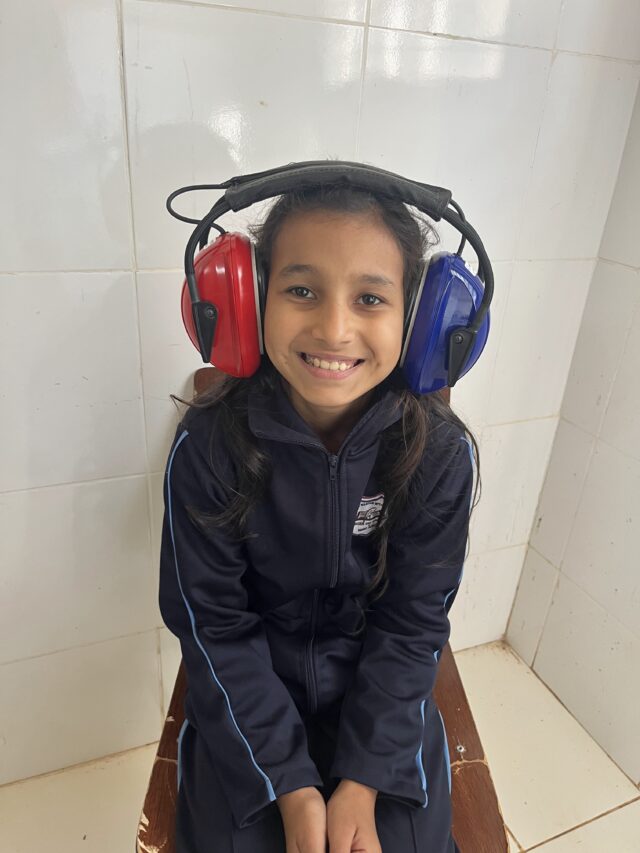 career. While attending Utah State University, he and fellow students regularly participated in humanitarian missions. After graduation, they founded Hear for a Purpose, a nonprofit dedicated to expanding access to hearing healthcare in underserved communities around the world.
For nearly ten years, the organization has conducted annual missions to the Dominican Republic while partnering with local organizations to create sustainable hearing healthcare services that continue long after each mission ends. More recently, the foundation has collaborated on global health engagements in St. Kitts and Nevis before expanding its work to Paraguay.
Why Mobility Matters
Humanitarian missions rarely take place inside purpose-built clinics.
In Paraguay, testing locations included open-air schools, community clinics, outdoor pavilions, and cinderblock classrooms where background noise would normally make conventional audiometric testing difficult.
After previously using WAHTS during missions to St. Kitts and Nevis, Dr. Foster knew its portability could make a meaningful difference.
“For school screenings and going out to some of these clinics and outreach activities, it was a game changer.”
For the Paraguay mission, the team relied exclusively on four WAHTS units – two provided by WAHTS and two from the Hearing Center of Excellence – to conduct hearing screenings and audiometric testing throughout the deployment.
Testing Hundreds of Patients
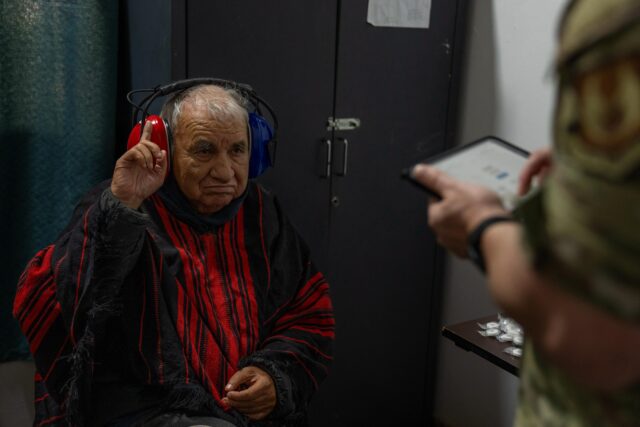
Over the course of approximately two weeks, the team screened an estimated 500 to 600 patients, ranging in age from approximately 4 years old to 95 years old.
Many school screenings were completed in roughly five minutes per child, allowing clinicians to efficiently evaluate large numbers of students while still identifying individuals who required additional evaluation or hearing aid fittings.
The mission included:
- Community hearing screenings
- School-based hearing screenings
- Audiometric evaluations
- Hearing aid fittings
- Follow-up assessments for patients identified during screening.
Overcoming Environmental Challenges
One of the greatest obstacles in humanitarian audiology is environmental noise.
Traditional portable audiometers often require clinicians to search for the quietest room available, and even then, background noise can make low-frequency testing difficult.
Dr. Foster explained that WAHTS significantly reduced those limitations.
Whether testing inside cement classrooms or outdoors beneath a pavilion, the system allowed clinicians to obtain thresholds that would have been difficult to capture using conventional portable equipment.
The portability of the system also eliminated another common challenge: unreliable infrastructure.
On previous missions, electrical outages frequently interrupted testing. Because WAHTS operates independently of wall power, the team was able to continue testing throughout the day without worrying about power interruptions.
Inspiring the Next Generation
One unexpected highlight of the Paraguay mission was the opportunity to work alongside local speech pathology and audiology students from the Universidad Catolica “Niestra Señora de la Asunción” (UCA) .
Serving as translators during the mission, the students were also introduced to WAHTS technology and participated in conducting screenings.
According to Dr. Foster, many had never seen anything like it before.
The experience not only supported patient care but also demonstrated how portable hearing technology could expand access to hearing healthcare throughout Paraguay.
Looking Beyond a Single Mission
For Dr. Foster, humanitarian missions are about more than delivering short-term care.
His nonprofit focuses on creating sustainable hearing healthcare programs by partnering with local organizations, governments, and healthcare providers.
That philosophy is already shaping future initiatives in St. Kitts and Nevis, where efforts are underway to establish a national hearing healthcare strategy. The long-term vision includes placing WAHTS systems throughout community health centers, enabling nurses to conduct hearing screenings both in clinics and in schools without requiring dedicated sound booths.
Expanding Access Where It’s Needed Most
For healthcare professionals working in remote, resource-limited environments, portability can determine whether hearing services are available at all.
The Paraguay mission demonstrated that hearing testing doesn’t always require a traditional sound booth or permanent clinic. With portable technology, clinicians were able to bring hearing care directly to schools, community clinics, and underserved populations, expanding access to care while maintaining efficiency in challenging environments.