
WAHTS Hearing FAQs
Everything You Need to Know
Have questions about hearing testing or fit testing? You’re in the right place. This FAQ covers everything you need to know about the WAHTS system — how it works, compliance with OSHA and ANSI standards, and why our wearable sound booth makes hearing conservation faster, easier, and more reliable.
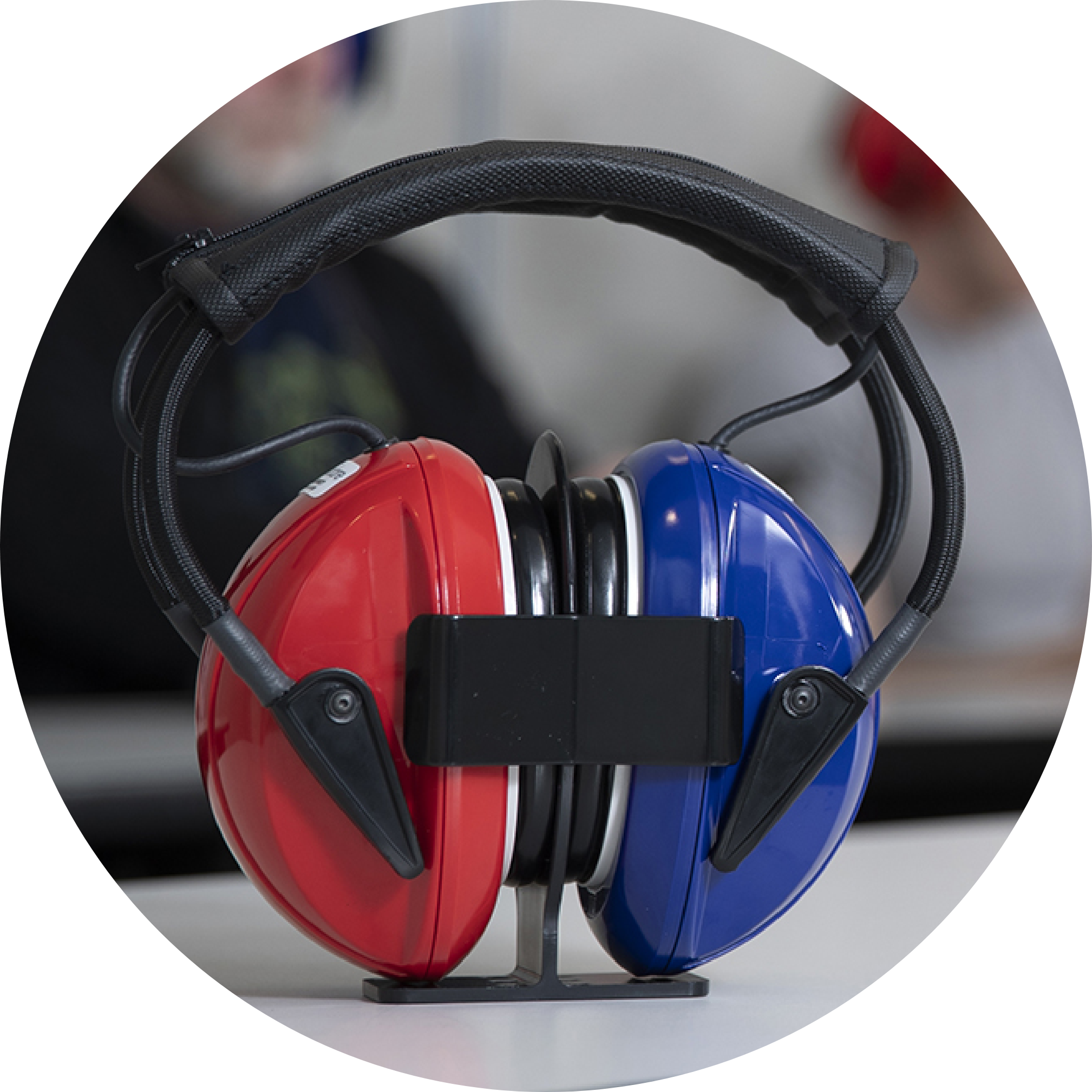
What is a hearing conservation program and why does WAHTS call itself a “wearable sound booth”?
A hearing conservation program is the OSHA-required framework for protecting employees working in environments with hazardous noise. It includes noise measurement, annual audiometric testing, hearing protection, training, and recordkeeping. WAHTS simplifies compliance with its boothless audiometry system — a true “wearable sound booth.” Our wireless headset and tablet solution deliver clinic-quality testing directly to the workplace, eliminating the need for a traditional booth.
What does OSHA require for hearing conservation compliance?
OSHA mandates that employers implement a hearing conservation program when employees are exposed to an 8-hour time-weighted average of 85 dBA or higher. This program includes baseline and annual audiograms, hearing protection, fit testing, employee training, and precise recordkeeping.
Which industries are required to implement a hearing conservation program?
Any workplace with hazardous noise exposure — such as manufacturing, construction, energy, mining, aviation, healthcare, and defense — must have a program that complies with OSHA’s hearing conservation standards.
What are the risks of not having a compliant hearing conservation program?
Without a compliant program, workers risk permanent hearing loss, and employers face OSHA fines, safety violations, and higher liability. Non-compliance can also hurt productivity and morale.
How can I tell if my workplace needs a hearing conservation program?
If workers need to raise their voices to be heard at arm’s length, it’s a sign noise levels may exceed OSHA limits. Employers should use dosimeters or sound level meters to document exposure and determine program requirements.
In-House vs. Outsourced Testing
How does in-house hearing testing with WAHTS compare to outsourcing?
Outsourcing often involves scheduling a mobile van or clinic once a year. With WAHTS boothless hearing testing, safety teams can conduct audiograms, fit testing, and refresher training anytime, on-site, with no disruption. In-house testing provides more flexibility, lower costs, and quicker compliance.
Can WAHTS replace a sound booth?
Yes. WAHTS is designed to function as a boothless audiometer with high-attenuation earphones and ambient noise monitoring. It provides OSHA- and ANSI-compliant results without requiring a physical sound booth.
What equipment is needed to run WAHTS in-house?
WAHTS includes everything: wireless noise-canceling headsets and a tablet preloaded with our testing software. Additional admin tablets can be added to test multiple people at once. Licensed audiologists can review results to ensure compliance.
How much can in-house testing with WAHTS save compared to mobile vans?
Most companies cut program costs by 30–50% using WAHTS. By removing travel, vendor fees, and downtime, hearing conservation becomes more affordable and efficient.
How do we train our staff to use WAHTS?
WAHTS is designed for ease of use. We offer short training sessions and onboarding support so your safety or occupational health staff can confidently administer OSHA-compliant audiograms and fit testing.
Compliance & Testing
Are boothless audiometers OSHA compliant?
Yes. OSHA and ANSI recognize boothless systems when combined with high-attenuation headphones and ambient noise monitoring. WAHTS’s wearable sound booth design ensures accurate, compliant testing in real-world settings.
How do noise dosimeters and real-time monitoring fit into a hearing conservation program?
Dosimeters measure exposure over an entire shift, while real-time monitors enable safety teams to respond quickly to hazardous noise. Together, they help ensure compliance and safeguard workers from permanent hearing loss.
What is hearing protection fit testing, and why is it important?
Fit testing confirms that earplugs provide the optimal noise reduction for each individual. Without it, actual protection can be cut by 50% or more. WAHTS provides fit testing in about 5 minutes, ensuring employees receive the protection they need.
How often should workers receive audiograms and fit testing?
OSHA requires a baseline audiogram within the first six months of noise exposure, followed by annual audiograms. Fit testing should be performed at baseline, whenever new protection is issued, or if an employee has difficulty achieving a proper seal.
Business Value of WAHTS
How does WAHTS reduce costs compared to traditional vans?
WAHTS eliminates travel, vendor scheduling, and downtime. Tests can be run on-site at any time, reducing per-test costs and lowering the overall expense of hearing conservation.
What’s the ROI of using WAHTS?
ROI results from lower outsourcing costs, fewer OSHA violations, and reduced workers’ comp claims. Improved prevention leads to fewer Standard Threshold Shifts (STS) and long-term health savings.
Can WAHTS reduce Standard Threshold Shifts in employees?
Yes. Regular, high-quality testing and precise fit verification with WAHTS help identify issues early, lower STS rates, and safeguard workers’ long-term hearing health.
Does WAHTS integrate with compliance and EHS platforms?
Yes. Results are stored electronically on the WAHTS tablet and can be exported into existing EHS, HR, or compliance systems for smooth reporting and centralized recordkeeping.
How quickly can WAHTS be rolled out?
Organizations can implement WAHTS in weeks, not months. Because the system is boothless and fully portable, safety teams can start testing almost immediately. Each session takes 10–15 minutes per person — about 7 minutes for the hearing test and 5 minutes for the fit test — and multiple people can be tested at the same time using additional admin tablets.
Technical Support FAQs
How long does the WAHTS headset battery last?
The WAHTS wireless headset offers up to 8 hours of continuous use on a single charge. For the best performance, charge it overnight before each testing session. If charging issues arise, make sure the cord is fully plugged in and the shipping switch is in the correct position.
When should I export my testing data?
The Audhere app is designed for daily workflows. Export data at the end of each testing day, or by Project if testing spans multiple days. All exports are saved in the Documents folder of the WAHTS tablet for easy transfer.
What’s the difference between a Project and a Session?
- A Project is the setup for a group — it defines the test parameters, frequencies, background noise requirements, and pass/fail levels.
- A Session is the testing process for an individual — including the health survey, hearing test, and fit test.
When should I start a new Project or Session?
- Start a new session for each individual being tested. Create a new project only after all sessions are completed and exported for the group.
- The Audhere app requires exporting before starting the next project.
Where are exported files stored on the WAHTS tablet?
All exports are automatically saved in the Documents folder. Each project gets its own dated folder, making it simple to track and organize results for compliance and recordkeeping.
Do I need internet access to use WAHTS?
No. WAHTS operates completely offline. The internet is only required if you want to upload results to a cloud platform or share files electronically.
How secure is WAHTS data?
All test results are stored locally on the WAHTS tablet in structured CSV files. Data can be encrypted or integrated into your company’s secure compliance systems after export.
Can WAHTS handle simultaneous testing?
Yes, WAHTS can scale to test entire groups at once. Without the internet, you can test up to seven people at once. With the internet, there is no limit. Each test taker requires their own headset and tablet, which then pair with an Admin tablet that administers and monitors the testing in real-time.