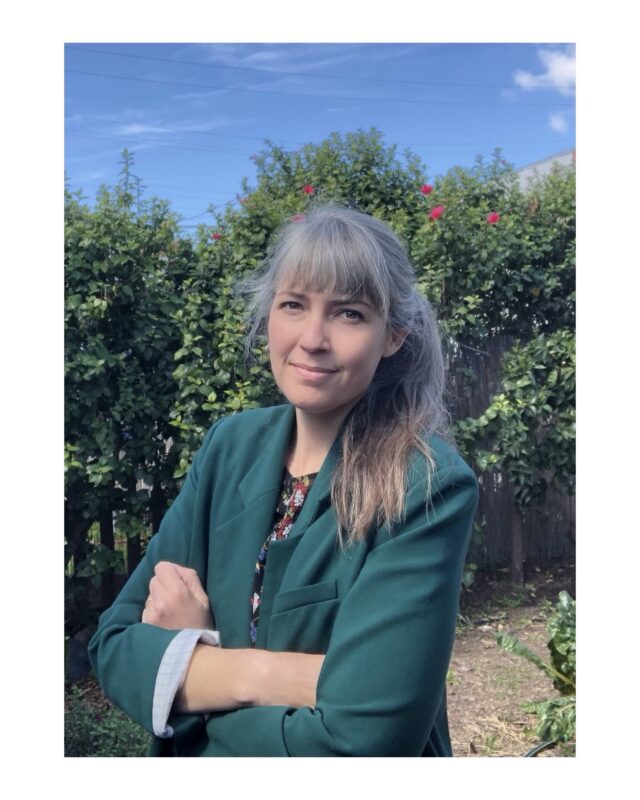
How Dr. Laura Coco uses WAHTS in audiology education and community-based research
For many people, the greatest obstacle to hearing care is not a lack of interest in their health. It is access. Distance, cost, language differences, limited awareness of audiology services, and the need to travel to a traditional clinic can all prevent people from receiving care. Dr. Laura Coco, Associate Professor in the School of Speech, Language, and Hearing Sciences at San Diego State University, is working to reduce those barriers through teaching and research that bring hearing care into the communities where people live and work.
A focus on access
Dr. Coco teaches undergraduate and graduate students in SDSU’s audiology program and conducts research aimed at improving access to hearing care, with a particular focus on Spanish-speaking older adults. Her work with agricultural workers in the U.S. Southwest grew from an invitation to provide hearing tests at a farmworker health fair.
The experience brought the population’s occupational noise exposure and barriers to traditional care into sharper focus. Agricultural workers may encounter loud sound from tractors, other equipment, and livestock, while also facing challenges related to language, cost, distance from providers, and limited awareness of available hearing services.
“People want to take care of their health. The issue is making hearing care accessible.”
That insight guides Dr. Coco’s broader research goal: finding approaches to hearing care that are appropriate, culturally relevant, and sustainable. One important strategy, she said, is going to communities rather than expecting every patient to reach a clinic.
Portable tools for community-based research
Dr. Coco initially brought WAHTS into the program to introduce students to alternatives to conventional, clinic-based audiometry. More recently, she has used its hearing protector fit-testing capability in research focused on reducing noise exposure and helping prevent noise-induced hearing loss among agricultural workers.
For this work, portability is essential. Dr. Coco may travel an hour and a half east of San Diego or attend health fairs in different locations. A system that can fit in a backpack makes it practical to take testing equipment into community settings instead of requiring participants to travel to a sound booth.
Fit testing also gives the research team a useful near-term measure. A personal attenuation rating can help show whether an educational intervention improved the way a participant inserted and wore hearing protection. That provides a more immediate outcome than waiting to evaluate changes in hearing over a much longer period.
The combination of audiometric testing and personal attenuation rating capabilities in one system is especially useful in the field. It reduces the need to transport multiple devices and simplifies the training and refresher support required for community health workers who assist with the study.
Preparing students for new models of care
WAHTS also supports hands-on learning in Dr. Coco’s course on service delivery models for third-year Doctor of Audiology students. The course explores telehealth, mobile testing, educational audiology, the Department of Veterans Affairs, and other ways audiologists can provide services beyond a traditional clinic model.
Students take turns acting as audiologists and patients while practicing remote hearing tests, fit testing, and other activities with the equipment. In Dr. Coco’s research lab, bilingual undergraduate and graduate students have also created step-by-step guides that community health workers can use when conducting fit testing. The guides are designed to be clear and easy to revisit because the workers support many programs and may use WAHTS only periodically.
Students are also working with the personal attenuation rating data collected from agricultural workers. As the program’s use of WAHTS grows, the system is beginning to support additional student research, including a planned Doctor of Audiology project led by a student working with Dr. Laura Dreisbach.
Meeting people where they are
Many of the people Dr. Coco meets through community-based work have never received a full audiogram. Some may remember a school hearing screening, while others have never had any hearing test at all. Bringing services to health fairs, workplaces, and other familiar community settings can reduce the travel burden and make a first encounter with hearing care more approachable.
Participants often find the technology interesting, but they may not recognize how different portable testing is from a conventional clinic experience because they have no prior hearing test for comparison. What matters most is that the service is available where they already are.
“If we can reach people where they already gather, we can minimize at least one barrier to hearing care.”
A more flexible future for audiology
Dr. Coco’s path to audiology has long connected hearing, language, teaching, and community. As a child of a deaf adult (CODA), she grew up using American Sign Language with her family. After studying Latin American studies, teaching English in South Korea, and volunteering at an audiology clinic in Mexico, she found a profession that brought those interests together. She later earned both clinical audiology (Au.D.) and research (Ph.D.) degrees and now helps future audiologists understand how research and evidence-based practice can inform patient care.
She believes the future of audiology will include more diverse models of hearing care. Portable technology is part of that shift, but so is the willingness of a new generation of audiologists to reconsider where, how, and by whom services can be delivered.
For Dr. Coco and her students, WAHTS is both a teaching tool and a practical resource for community-based research. Its value is clearest in the moments when hearing care moves beyond clinic walls and reaches people who might otherwise remain outside the traditional system.