Hearing conservation has a workflow problem. Open-room testing fails because of ambient noise. Booths solve the noise problem, but they won’t travel. Mobile vans travel, but they bring liability, scheduling headaches, and growing vendor reluctance. And once the test is done, the data ends up in spreadsheets that nobody can find during an audit.
Dr. Sarah Mouser, Au.D., has spent more than two decades working on that problem. The practice she built around it, Occupational Sound Solutions, is what occupational hearing conservation looks like when every workflow step actually works. WAHTS sits at the center. Here is how she built it.
Meet Occupational Sound Solutions
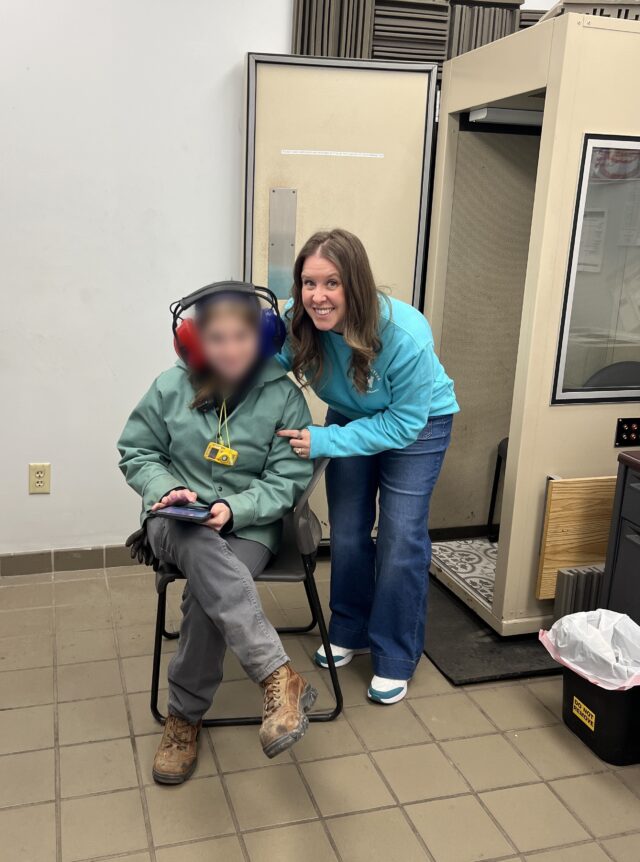
Sarah’s client base spans manufacturing, mining, mobile service providers, and occupational clinics. The common thread: workforces distributed across multiple sites, ambient conditions that strain testing equipment, and compliance programs that must withstand OSHA or MSHA audits. Occupational Sound Solutions exists to make those programs work end-to-end through what Dr. Mouser describes as a “hands-on, community approach.”
In her words, the mission is: “to establish a long-lasting personal relationship with you by providing a hands-on, community approach to any services offered.”
That hands-on philosophy is why she is meticulous about the tools she provides to clients. A hearing conservation program is only as good as its weakest workflow step, and Dr. Mouser does not put her name behind weak workflows. When she could not find the right tools for the workflow steps that follow the test, she built them herself: OccuSound® Nexus and OccuSound® Insight, two platforms her firm developed and now offers to other hearing conservation operators.
The Friction in Traditional Hearing Conservation
Before WAHTS, every annual testing engagement carried the same set of unresolved problems.
Open-room audiometric testing, the only practical option in many industrial settings, struggled with ambient noise, which compromised the validity of threshold measurements. Sound booths solved that problem, but they were immovable, capital-intensive, and impossible to deploy across multi-site clients. Mobile audiometric vans were the next compromise, but Dr. Mouser saw vendors increasingly unwilling to accept the liability of bringing a truck or trailer onto a client’s property.
Once the test was done, the data layer added its own drag. Spreadsheets. Manual entry. Files scattered across drives. Audit prep meant a multi-day search for records that should have been instantly available. None of it served the people the program was supposed to protect: the employees being tested.
Why WAHTS Made Sense
When Dr. Mouser evaluated WAHTS, four things stood out: “Attenuation of the headset, ease of use, compact nature, transportability.”
In the practical reality of an occupational audiology practice, those four features have clear meaning.
The attenuation gives her diagnostic latitude in rooms that would never qualify as audiometric environments by traditional standards. Boothless audiometry stops being a compromise and becomes a deliberate design choice.
The ease of use means a client safety coordinator, not just a credentialed audiologist, can administer compliant tests under her professional supervision. That changes the unit economics of a small program.
The compact, transportable form factor means she walks into a client site with the audiometer, not a vehicle. No trailer logistics, no scheduling around a vendor’s route, no liability conversation with the client’s facilities team.
For the audiologist, all four traits add up to one outcome: hearing conservation that goes where the workforce is, with no compromise to the data.
The Stack: WAHTS, Nexus, and Insight
The full picture, though, is not just about the audiometer. It is about what happens after the test.
Dr. Mouser’s practice runs on a three-platform stack: WAHTS for testing, OccuSound® Nexus for data management, and OccuSound® Insight for professional review. WAHTS is the audiometer Occupational Sound Solutions trusts. Nexus and Insight are the platforms her firm built after years of watching the market fail to deliver a turnkey post-test workflow, and now licenses them to other hearing conservation operators. The flow is straightforward and, more importantly, automatic.
"Test it. Store it. Review it. Done." Dr. Sarah Mouser, Au.D., Occupational Sound Solutions |
WAHTS tests. OccuSound® Nexus, the cloud-based command center, organizes and stores the data. OccuSound® Insight runs the professional review and reporting. One connected pipeline from the audiometer to the professional supervisor’s desk, with no manual handoffs in between.
The direct integration between WAHTS and OccuSound® Nexus is the core component. Audiometric data flows automatically from the headset to the platform. No imports. No lost files. No spreadsheets. Audit records, compliance reports, and historical baselines live in one secure place, accessible across multiple locations in real time, and built to OSHA and MSHA standards.
Once the data is in OccuSound® Nexus, Insight manages the clinical layer. Every problematic audiogram is automatically flagged for professional review. Determinations made in Insight feed back into the compliance record in OccuSound® Nexus, which is securely stored and backed up for long-term program integrity.
The whole pipeline is designed to do something most hearing conservation programs cannot: run itself between scheduled testing events, with full clinical defensibility and no daily intervention by program managers.
What Dr. Mouser’s Clients Get from the Combined Approach
Across her client base, Dr. Mouser sees the integrated approach deliver results in three categories.
Operational
Manual data entry and file management are eliminated, freeing staff time for work that requires their judgment. Audiometric records are accessible in real time across multiple sites and mobile units. Reporting is automated rather than being chased.
Compliance
Programs remain audit-ready at all times, with OSHA and MSHA criteria built into the platform. All records are HIPAA-compliant, encrypted, and automatically backed up. Every professional review determination is retained for the program’s lifetime.
Employee Health
This is where the system earns its keep. Hearing shifts are detected early through the automatic flagging of problematic audiograms, before they escalate to recordable hearing loss. Expert review yields actionable follow-up recommendations. Employees who need intervention are identified faster and more accurately than in a spreadsheet-driven program.
In Their Words
| “Working with Dr. Mouser and OccuSound® has been amazing. The OccuSound® Nexus software is intuitive and easy to navigate. The fact that it integrates with the equipment simplifies things even further and saves a lot of time, especially during busy testing seasons. They have helped streamline my business and simplify my life.”
Client, Occupational Sound Solutions |
The Modern Blueprint for Hearing Conservation
Dr. Sarah Mouser’s practice offers a practical answer to a question safety leaders have asked for a decade: Can hearing conservation function as a clinical program rather than a compliance burden? With WAHTS as the audiometer and a modern wearable sound booth and audiometry stack built around it, the answer is no longer aspirational. It is operational, deployable today, and already running across some of the most demanding industries in the country. The same WAHTS-powered, turnkey stack Dr. Mouser uses for her clients is available through Occupational Sound Solutions to other operators and to those managing in-house hearing conservation programs.
See what WAHTS can do in your environment. Request a demo.